

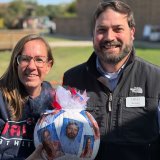
Alumni Panel Addresses Belonging, Community, Global Citizenship

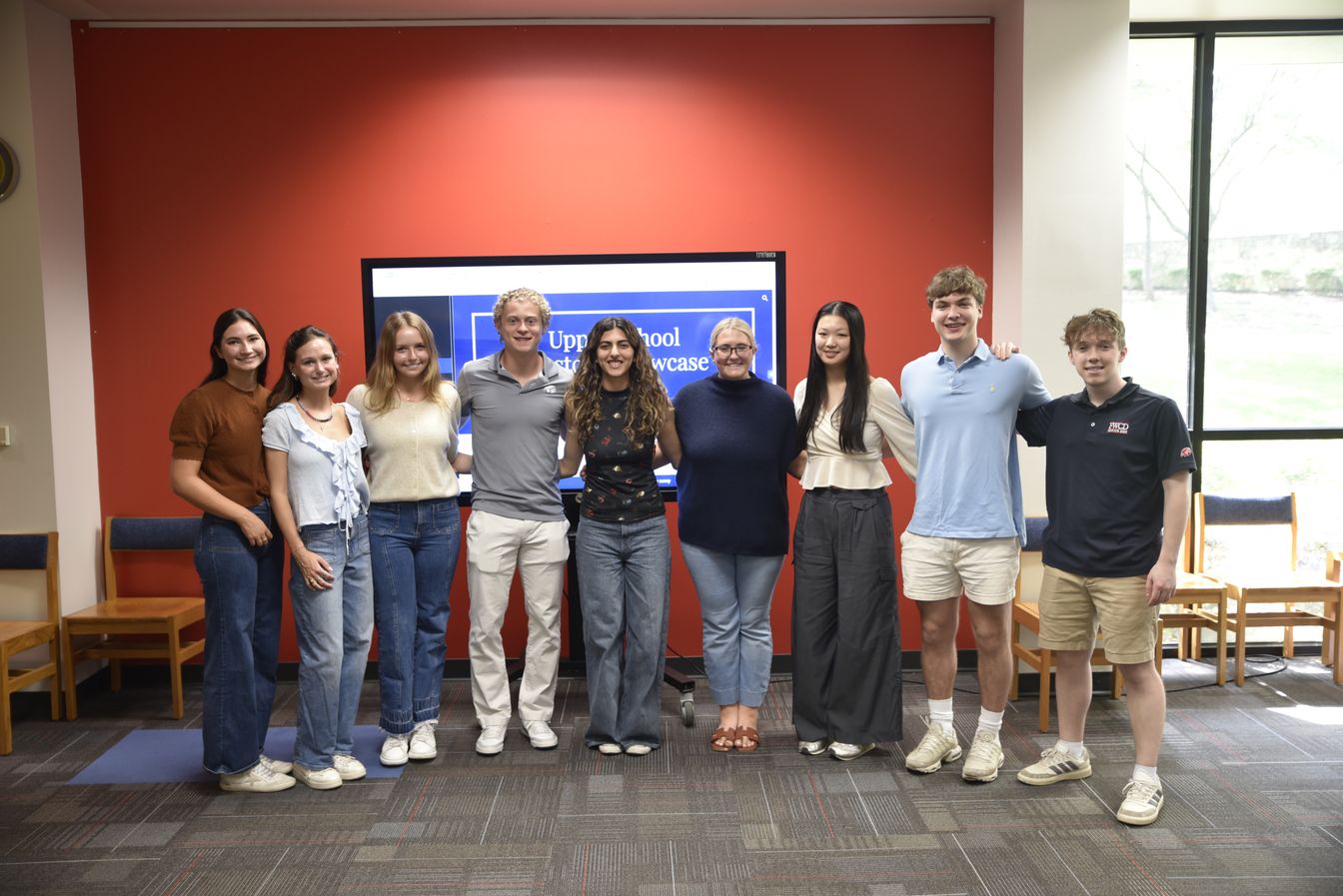
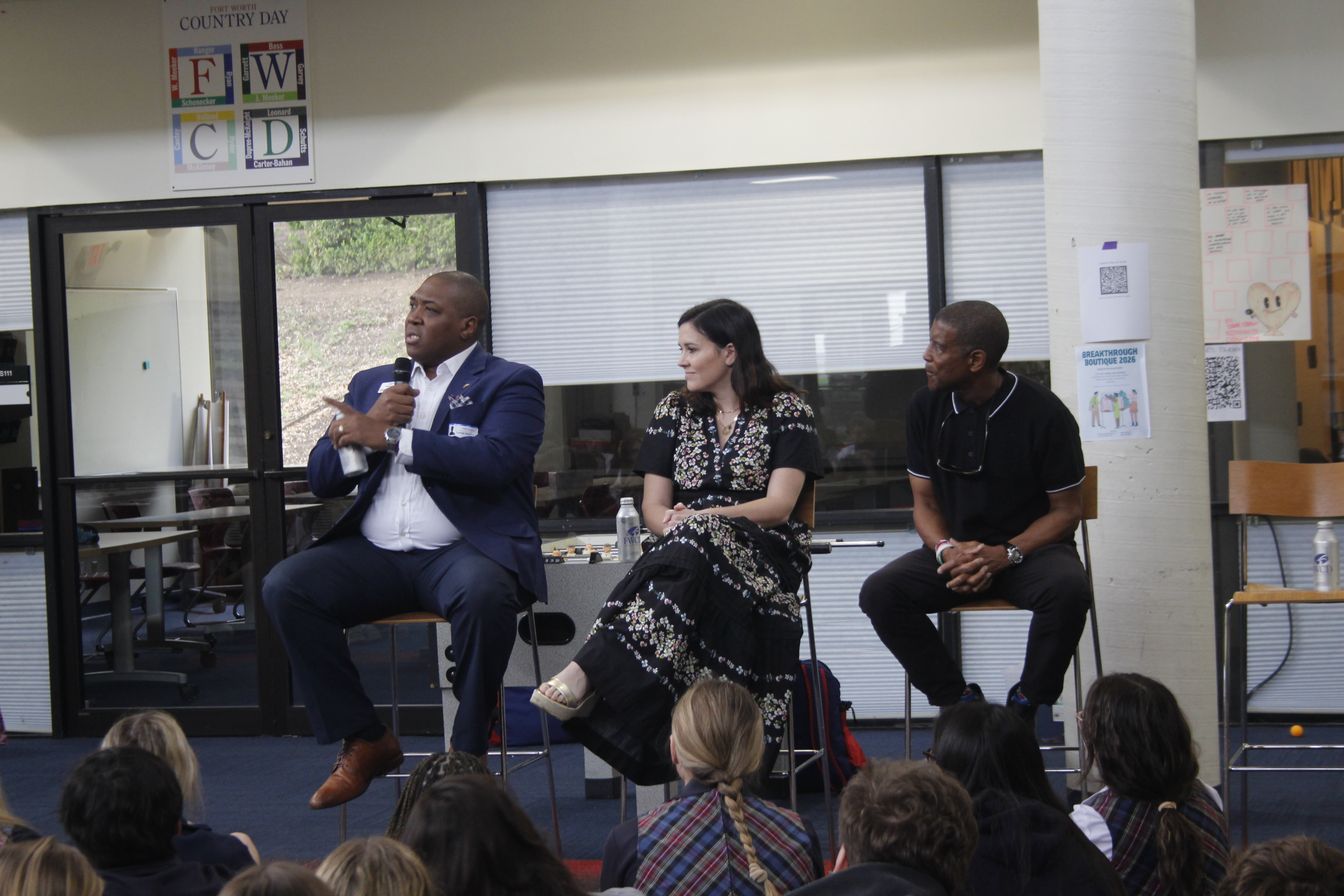
In a conversation centered on belonging, leadership and community, three alumni shared their experiences and perspectives with Upper School students during an AFFIRM panel discussion. AFFIRM stands for Alumni Falcons Fostering Inclusion, Respect and Multiculturalism. Nicole Masole-Rose, Director of Community Engagement and Inclusion, introduced the panel while students in her Upper School IDEA (Inclusivity, Equity, Diversity, and Affinity) group asked the panelists questions. She worked with Alumni Relations Coordinator Eleanor Siff to bring the three alums to campus.
Sitting in the Upper School Commons, a space that brought back memories for each of them, Cornell Woolridge ’96, Courtney Siegel Landes ’00 and Joe Breedlove ’78 reflected on how their time at FWCD shaped their careers and life paths. While these three alumni are from different generations and careers, they shared similar messages with students: listen, challenge assumptions, and seek opportunities to understand people whose experiences differ from your own.
Woolridge, Senior Assistant Director of Admission for Austin College, opened the conversation reflecting on his favorite FWCD memory: a Homecoming football victory that marked the first time in many years that FWCD had defeated Episcopal High School. While the win was memorable, Woolridge told students that some of the most valuable lessons he learned from Country Day came from conversations and experiences that pushed him to think beyond his personal perspective.
Looking back, Woolridge said he wished he had made more of an effort to engage with people who held different viewpoints. Learning to listen, he said, is one of the most important skills students can develop if they hope to lead and serve others effectively.
Landes, a Licensed Clinical Social Worker who has worked at the Lena Pope Foundation for nearly 15 years, shared that everyday moments on campus, such as gathering for announcements in the Upper School Commons, were among the most meaningful to her.
She acknowledged that the transition from FWCD to college revealed how much larger and more diverse the world is. Landes emphasized to students the importance of stepping outside familiar circles and intentionally building relationships with people who think, look and live differently. “The best leaders lead with empathy and kindness,” Landes said. In her work with children and families, she sees firsthand how powerful empathy and kindness are and how they help people feel seen, supported and included.
As Executive Director of Breakthrough of Fort Worth, Breedlove reflected on how much the School has evolved since he and, later, his brother, Stephon ’79, arrived on campus in the mid-1970s. He recalled being the only Black student in the Upper School. This experience shaped his understanding of belonging and the importance of remaining open to people and ideas that are different.
Over the course of the discussion, all three panelists encouraged students to challenge the assumptions they have of themselves and of others. Woolridge shared how nearly missing the opportunity to attend FWCD was the result of assumptions he made about private schools. Reconsidering those beliefs, he said, ultimately opened doors that changed his life.
When asked what adults often underestimate about teenagers, the panelists agreed that young people are far more thoughtful and capable than they are often given credit for. Today’s students, they noted, have unprecedented access to information and perspectives from around the world, placing them in unique positions to imagine new solutions to complex problems.
The conversation closed with a focus on service and impact. For Woolridge, one of his proudest achievements came through civic engagement work in El Paso, when he helped young people with disabilities advocate for expanding opportunities, including internships with city departments. Landes spoke about equally meaningful moments working with youth in the juvenile justice system, helping hundreds of families redirect their paths to create new possibilities.
The stories shared by Woolridge, Landes and Breedlove reinforced that meaningful change begins with individual actions and relationships. Belonging, leadership and service are not abstract ideas reserved for adulthood. They begin with curiosity, empathy, and a willingness to learn from others.
.jpg "The Class of 2026 By the Numbers")