

Learning from a Master Photographer
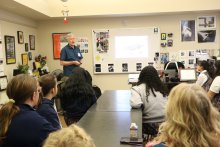
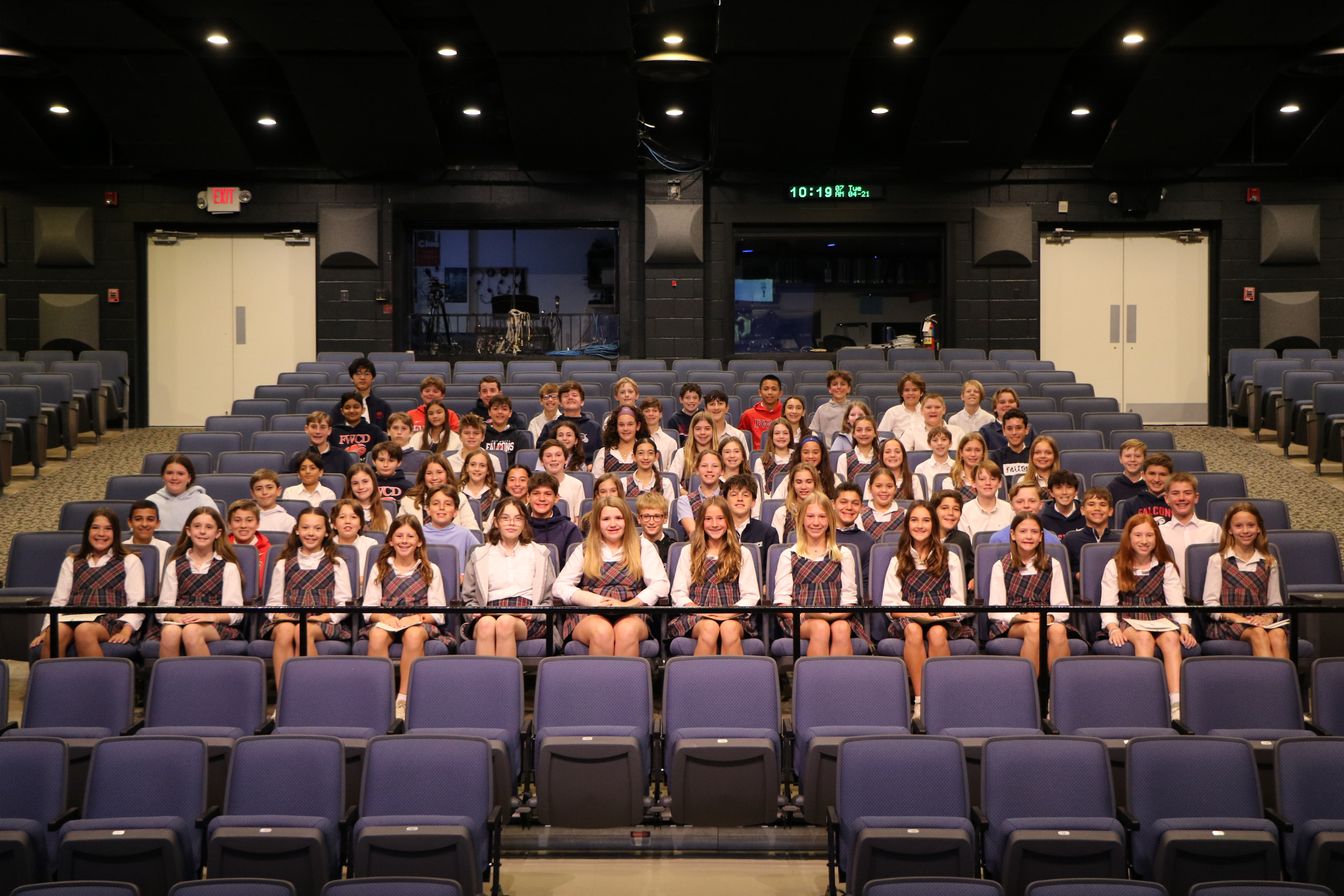
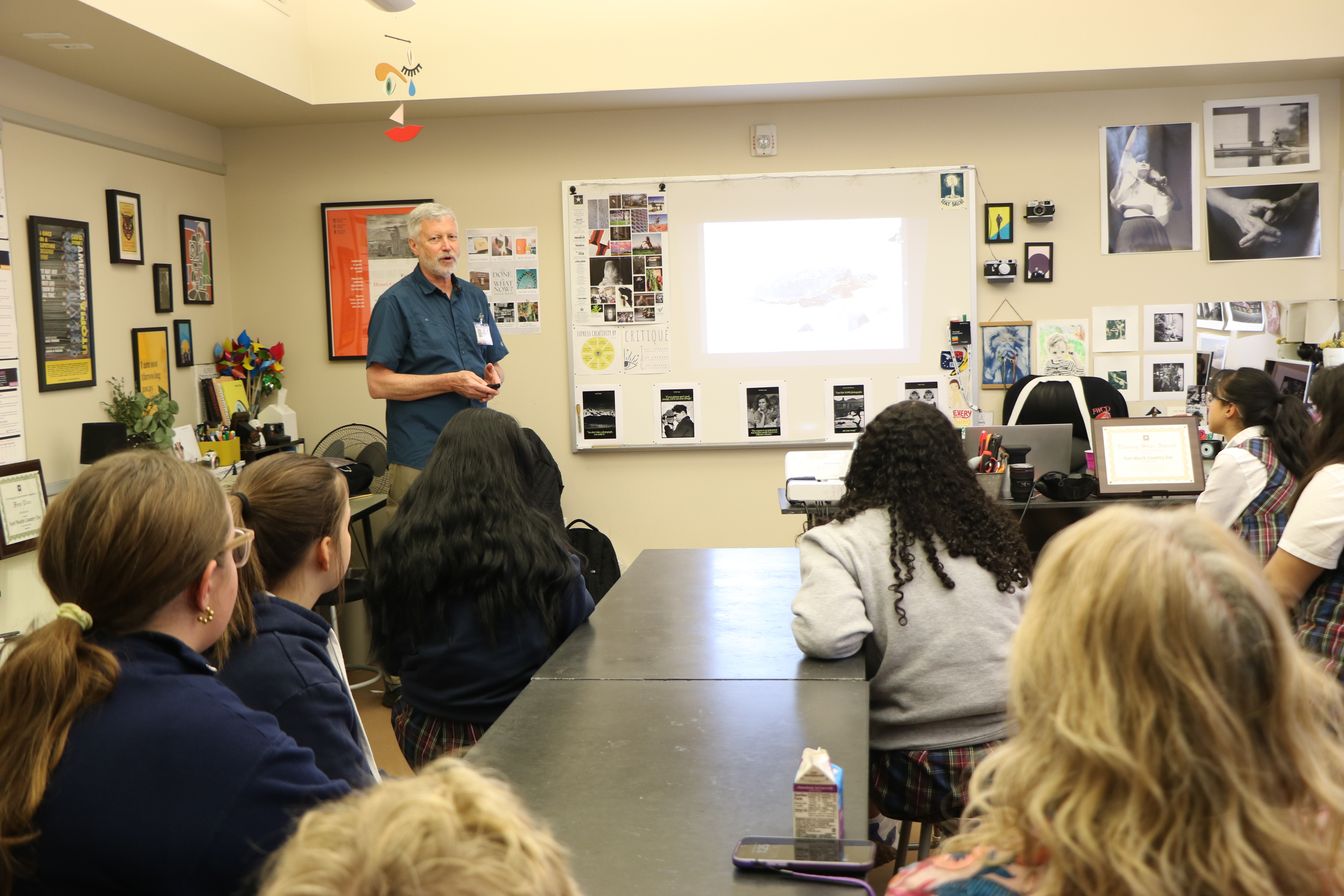
FWCD students spent time exploring America’s national parks … without ever leaving campus, thanks to a Supporting CAST grant. Photographer David Hares visited FWCD to present his program, “Exploring America’s National Parks,” to fourth graders and joined Emily Arnold’s Upper School photography class to talk shop.
Hares’ love for the outdoors began long before he even considered photographing all 63 U.S. national parks. His father, a college professor, spent summers loading the family into the van and tent camper for six-week adventures in national parks across the country. The family could not afford a camera at the time, so Hares collected postcards from all the places he and his family explored. At 16, he got his first camera, “and it’s been hanging around my neck ever since,” he said.
After graduating from college, Hares wanted one more adventure before joining corporate America. He spent six weeks in the Western U.S. and Canada. He covered 8,400 miles and visited 12 national parks. Hares’ travel was different once he started working because he didn’t have the luxury of time. He traveled by plane and got to know his travel agent so well that she became his wife.
In 2007, his wife died unexpectedly, and he turned to travel with his two teenage children as a sanctuary. He loved the open road and began to prepare for a life outside the corporate world, following a dream: to explore and photograph the national parks.
He studied under professional photographers to refine his craft and planned to take a three-month sabbatical after his youngest left for college. Just before graduation, Hares’ company was undergoing layoffs; he volunteered and founded Hares Photography.
In 2012, beginning at Big Bend National Park, he launched a 13-year journey that would take him more than 150,000 miles through all 50 states, eventually photographing every U.S. national park.
Today, Hares and his second wife spend four months each year living out of their truck and camper as they continue the adventure. His children also join him here and there for a week.
In the fourth grade presentation, Hares blended storytelling, photography and a call to action. He introduced the students to the Every Kid Outdoors initiative, a federal program supported by the National Park Service, the National Oceanic and Atmospheric Administration, the U.S. Bureau of Land Management, and the U.S. Bureau of Reclamation. The program provides fourth graders with free passes to national parks, encouraging young explorers to discover America’s wildlife, resources and history firsthand.
In the afternoon, the Upper School photography students leaned into technique. He shared stories behind the images he shared, how “bad weather makes good photos,” why he often shoots the same scene 10 minutes apart to capture changing light, and why early mornings before 10 a.m. and late afternoons after 4 p.m. produce some of the most compelling images. “A lot of photography is studying the light,” Hares said. “Photography is about patience. Enjoy your surroundings while you’re waiting for that shot.”
Hares stressed that a good photograph must trigger a memory or evoke an emotion. None of his images are heavily post-processed; instead, he relies on preparation, framing and timing. He has photographed more than 800 bears and, at times, works with park officials to help protect wildlife, reminding visitors that photographing animals requires mutual respect and distance.
In his discussion of composition and framing, Hares urged students to “look where people don’t; see what people don’t see,” and described how shooting the same landscape multiple times can transform an ordinary image into something extraordinary. He emphasized that patience often matters more than equipment and that sometimes the most powerful photographs come when others have packed up and gone home.
His work has been exhibited at the Fort Worth Museum of Science and History, and his book, Exploring America: A Photographic Journey, published by Rabbit Press, captures many of the images students saw during the presentation.
By the end of the day, students had traveled glaciers, deserts, forests and coastlines through Hares’ lens and were excited to visit the U.S.’s national parks.
Hares’ visit was made possible by a Supporting CAST Grant. CAST—Creative Arts Students and Teachers—funds visual and performing arts programs at Fort Worth Country Day that would otherwise not be supported. These experiences enhance students’ artistic visions, open their minds to the arts world beyond FWCD and engage them in hands-on work with dynamic professionals. The Department of Performing and Visual Arts thanks Supporting CAST for helping to enrich activities each school year and for hosting receptions for visual and performing arts events on campus. To get involved with Supporting CAST, email Lindy Heath, Director of Fine Arts.
.jpg "The Class of 2026 By the Numbers")