


40 Years of Change: Daily Class Schedules

Armed with my brand-new bachelor’s degree, in 1985, I started teaching and coaching at the Casady School (a K-12, coed day school in Oklahoma City and in FWCD’s same varsity sports and academic accrediting associations). I taught Spanish and history in both the middle and upper schools, and I coached (or assisted) varsity volleyball, soccer and tennis teams. That crossover of subjects and of divisions was possible in large part because of the way the daily schedule worked.
In 1991, I moved to another K-12 school, the Head-Royce School in Oakland, California, and began teaching history in seventh, 10th and 12th grades while also getting to work in the Admissions and College Counseling Offices and still coaching volleyball.
Casady had the traditional daily schedule: seven academic periods every day, the same 45-minutes-long classes in the same order each day. The class that came right after lunch was always my biggest challenge. At 12:45 p.m., students’ energy was mostly occupied recovering from the meal. More blood was going to their stomachs than to their heads. The challenge of many mouths yawning and lots of eyes at half mast was the norm; the only positive spin was that the after-lunch class was getting my second or third attempt at that day’s lesson. One or two periods of the same subject before lunch allowed for tweaking and often improved the lesson’s delivery, but many students were still needing a nap more than AP U.S. History.
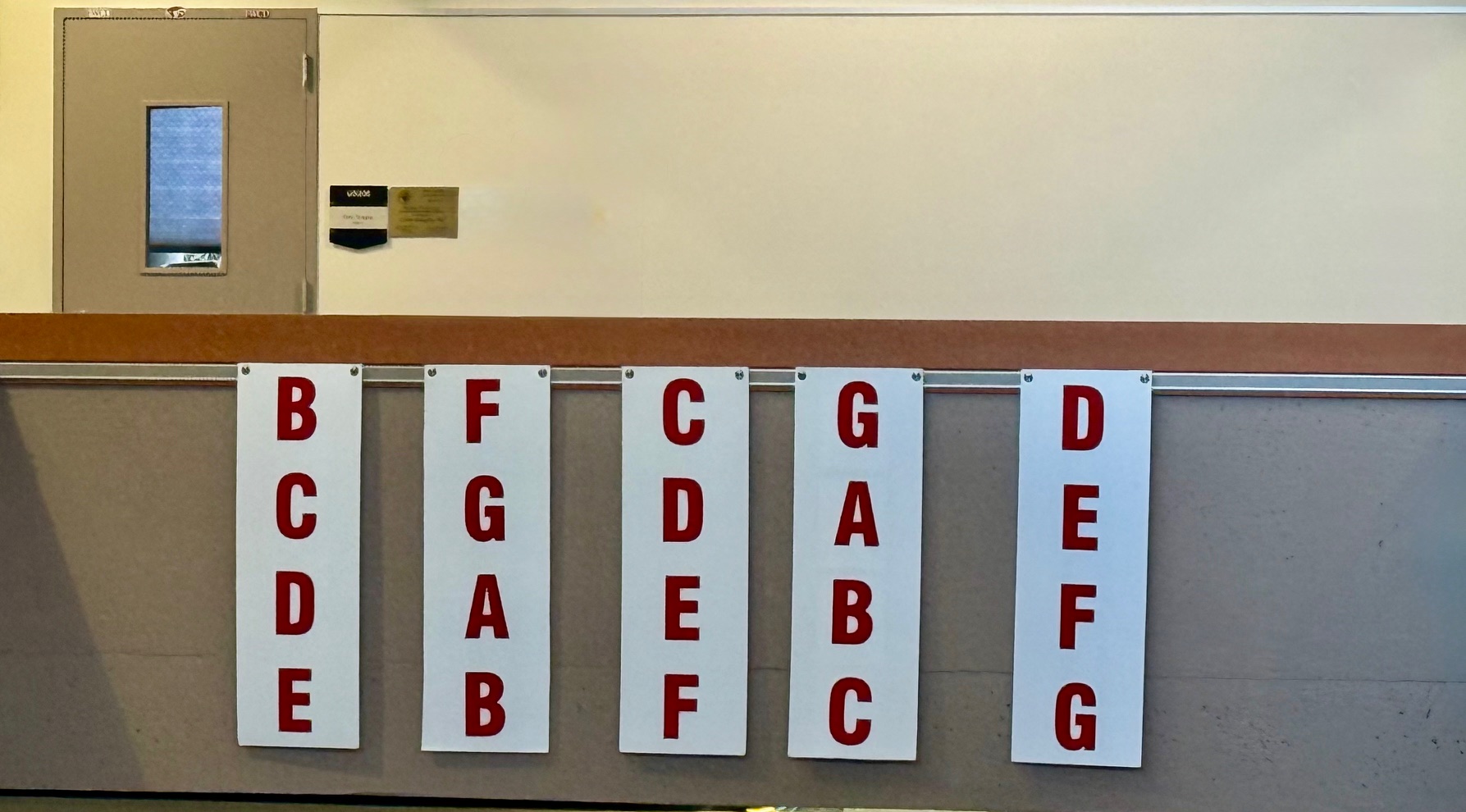
Head-Royce was where I was introduced to the rotating schedule. For them, that meant the classes were assigned letters (“A” through “H,” as I recall) and those classes rotated through the periods from one day to the next. My “A” period class met first period one day, moved to second period the next, then third period, before getting to its one day in the dreaded slot right after lunch. Friday, “A” period was the last class of the day, also a tough slot given the number of sports teams that would miss for game days, not to mention the attention challenges created by just being last period on a Friday. While there was a learning curve to the logistics, the benefits of the rotating schedule were immense: That Friday last-period spot was only a once-a-week occurrence. The middle and upper schools at Head-Royce also had the same schedule, same blocks, same rotations, allowing me and other teachers and coaches to continue to “cross over” from middle to upper school and from academics to athletics.
When I arrived at FWCD in 2015, the School had already taken scheduling to another level of excellence. In 2025, we basically still have the same schedule, though we are always asking ourselves if we need changes or tweaks. With the Lower, Middle and Upper Schools each having very distinct schedules, we best meet the needs of the age group, but we lose the benefit of the crossover teacher. We have not only the rotating class periods at FWCD, but we also have, depending on whether you are in our Lower and Middle or in the Upper School, rotating days. That means all Mondays are not alike. Furthermore, in the Upper School, not all periods are 45 minutes long. In fact, our Upper School has some of the wisest elements for a schedule: Classes start at 8:50 a.m., better accommodating adolescent sleep habits. The 7:30 a.m. start for Upper Schoolers is a thing of the past here.
As significant as the later start to the day is the fact that we limit our older students’ daily load to four classes, down from the previous seven or eight. On a given day in the FWCD Upper School, students have a maximum of four classes, each of which is 70 minutes long. Only rarely does a student have any class on two consecutive days. That means the nightly homework is not of the old-fashioned seven or eight subjects a night. Our schedule at FWCD is very humane, very “well-being” focused.
In 2025, we are still looking at our schedule and exploring ways to maximize its effectiveness. A guiding principle, right out of Strategic Plan 2030’s Pillar IV, is what is best for student and faculty well-being. In my 40 years as an educator, we have come a long way from the factory approach in which students go through each day like car parts on an assembly line. We have evolved to treating our students more like humans on a hike, a hike with rest stops, sometimes a strenuous hike, sometimes a stroll, always through the world of wonders that classroom learning can be. The better and better, more and more thoughtful daily schedules that have evolved over the last 40 years in schools are a crucial element in changing the dynamic from school as a forced march to school as a gallery walk (with tests and quizzes!).





.jpg "My First 40 Years: Snow Days, Then and Now")