


My First 40 Years: Changes in School Communications

In 1985, my first year as a teacher, communication with colleagues was either in-person or it was a handwritten note. Formal communication with parents took the form of handwritten narrative comments at the end of marking periods made in triplicate on carbonless (NCR) sheets, by phone, or in carpool. We did have answering machines, but those were the original tape-recorder kind that plugged into home phones. They were not something you could access remotely.
There was plenty to recommend those simplified school-parent interactions of 40 years ago. For instance, because other contact was sparse, parents were highly incentivized to attend twice-a-year conferences. Faculty benefited from talking things through with one another face-to-face, stepping out of their classrooms to interact. Personally, I developed an affinity for carpool check-ins: I continue to value the quick, curb-to-car conversation with a parent about a child’s success or struggle that day or week, at school or at home.
When I was applying for jobs out of graduate school in 1991, I was struck by the way a Middle School Head whose school I visited as a candidate (Bryn Mawr, Baltimore) had adjusted her faculty’s communication. She had established a daily, standing-in-a-circle meeting with her faculty to get them out of their classrooms. “Old school” and brilliant. The meeting took all of two minutes, but the “after meeting” was the real point. Faculty went from being siloed in their private classrooms to interacting daily, face-to-face.
That 1991 search took me to another K-12 day school, the Head-Royce School (HRS) in Oakland, California. Before I left HRS in 1996, voicemail was part of the school phone system, and email had been invented. Email was a novelty, though, until I arrived at my third school, St. John’s of Houston. What a thrill it was to be able to directly contact people without having to call or walk down the hall. The convenience of the typed message magically appearing on the screens of our new desktop computers had so many advantages, notably more time in the day to communicate, more chances to make sure you told that parent or that teacher the information you needed them to have. I have no memory of spam from those first few years of “[email protected].”
In 1998, as Middle School Head at St. John’s, I mailed, in an envelope with a stamp, a quarterly newsletter home. I started getting responses via email. In the early 2000s, we began to send the newsletter as an email.
The problems with email emerged slowly. We stopped calling each other as much. Teachers stopped leaving their classrooms to have casual conversations with colleagues. Spam emerged. I was moved to create an email-free week among colleagues at school. Expectations were changing: Why couldn’t you share with that parent, for instance, their child’s current grade after the school day had ended, before the next day began?
Forty years later, carpool conversations are still valuable. Voicemail has gotten even easier, not only not needing a “tape recorder,” but also being on our mobile phones. Text messaging is incredibly convenient, while potentially intrusive. Email is a mixed bag. I avoid reading it on my phone for fear of checking it every 10 minutes. I try to keep email tasks to my desk. With its convenience, email will always be, for me, more of a necessity than a preference. Without the sound of the other person’s voice, or, even more valuably, without the sight of the other person’s face, tone is lost, and, unfortunately, our usual restraints can be compromised. Most negative about email, we write and send things from behind a screen that we would not say in person. Too often, that lack of hesitation causes problems.
As we start 2026 at Fort Worth Country Day, we have an entirely new phone system through Zoom. It will not be perfect, but the new phone system is so much more sophisticated and reliable than what was failing us this fall. Email remains a communication choice for many. This “newsletter” is sent electronically.
For the sake of our faculty and staff’s long-term sense of work-life balance and their ability to keep doing amazing work, I have asked them to stop answering emails (or phone calls) after school hours. Our faculty members take home work almost every night. They signed up to grade papers and to prepare lessons. After spending time with their families and friends, teachers prioritize grading and lesson preparation during after-school hours. My message to parents is to please manage your expectations. Expect a faculty or staff member to acknowledge your email or voicemail within 24 hours, but do not expect them to respond at any length during non-school hours and certainly not on weekends.
Lastly, in 2026, artificial intelligence has become a part of the communication matrix. Faculty and staff may use AI as an assistant in reading or creating emails or even in reviewing narrative comments. That said, the expectation is that the human has the last word on any such communication. Given that I worry about tone being lost in an email written by a human, my concerns are only greater for electronic communications generated by artificial intelligence.
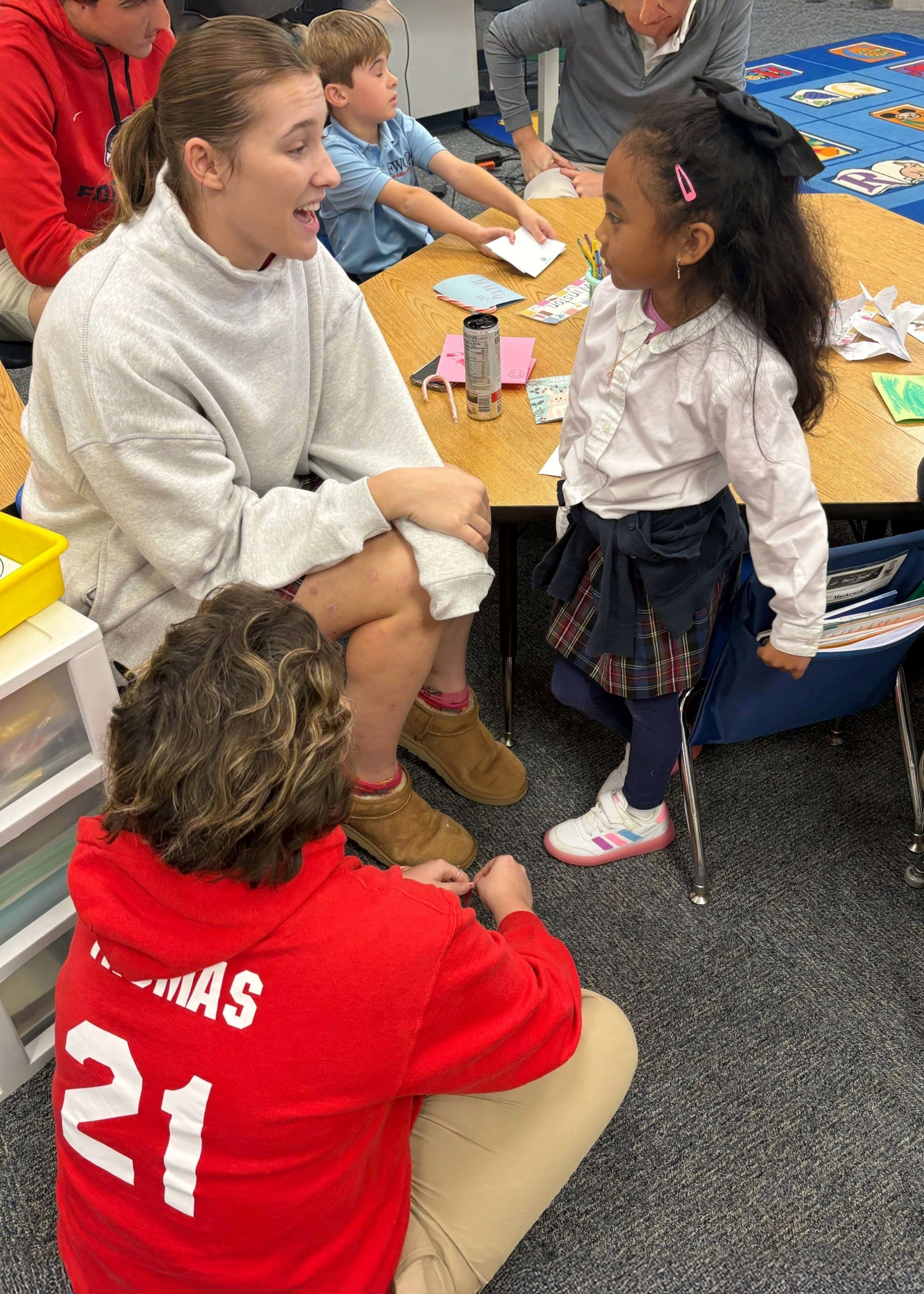
We live in community, in our families, at our jobs, and certainly in our school. Community depends on communication. May we continue to develop more and more amazing tools to assist our communication, but may we always remember that the simple face-to-face interaction is essential and invaluable.



.jpg "My First 40 Years: Snow Days, Then and Now")