


Seen, Read, Heard: The Coddling of the American Mind
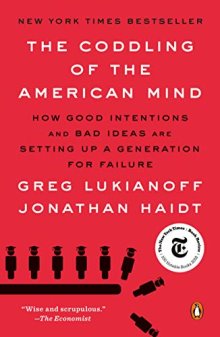
The Coddling of the American Mind: How Good Intentions and Bad Ideas Are Setting Up a Generation for Failure is an important book. Our faculty and staff had it as one of their summer reading choices this past summer. It accomplishes a favorite goal of mine in a read about education: it provokes.
The authors, Greg Lukianoff and Jonathan Haidt, assert that “adults are doing far more these days to protect children, and their overreach might be having some negative effects.”(13) That’s actually a pretty tame thesis, especially with the word “might” in it. But the greater premise is more powerful: We adults are disabling our children from being able to handle challenges, including the challenge of listening to someone with whom they do not agree.
They dive deeply into three “untruths”:
The Untruth of Fragility: What doesn’t kill you makes you weaker. (14)
The Untruth of Emotional Reasoning: Always trust your feelings. (14)
- They express concern about what they see as a “shift from ‘intent’ to ‘impact’” (43), looking for ill will, focusing on a perceived intention and an impact.
- They cite a University of Chicago President: “Education should not be intended to make people comfortable; it is meant to make them think.” (Hannah Holborn Gray) (50)
The Untruth of Us Versus Them: Life is a battle between good people and evil people. (14)
- The result of this either-or thinking, the authors argue, is people are either “demonized or lionized;” (54) they are put into one box or another: “victim” or “oppressor.” (57)
- “‘So many teens have lost the ability to tolerate distress and uncertainty, and a big reason for that is the way we parent [educate] them.” Kevin Ashworth as quoted in Lukianoff (163).
- “Citizens of democracy don’t suddenly develop this art on their eighteenth birthday.” (191)
- Supreme Court Justice John Roberts’ counsel to his son's fourth grade class “to see the message in your misfortune” is astounding. (193)
- Noting a preponderance of undeserved fears about kidnapping and the like, they charge parents (and educators) to, “Assume that your kids are more capable this month than they were last month.” (237)

.jpg "FWCD’s 60th Commencement")




.jpg "My First 40 Years: Snow Days, Then and Now")